
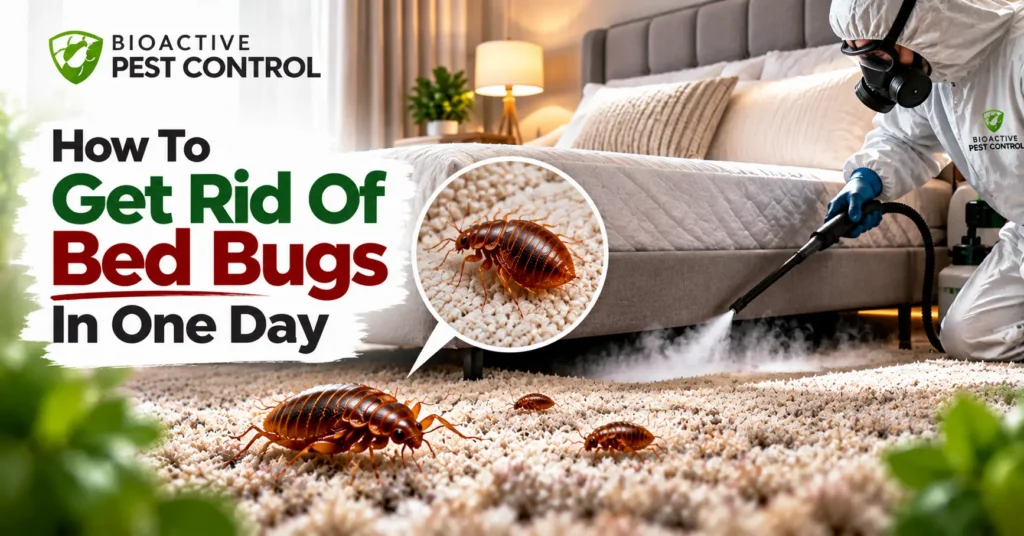
Every night, while you sleep, your bed can become a restaurant you never agreed to host. Bed bugs are tiny vampires that feed on blood. They show up on the bed at night, and guess what, you are the menu. They hide inside mattress seams, bed frames, furniture joints, and the cracks near your sleeping area. If not addressed on time, they can take over the entire house before you smell the emergence.
When bed bugs attack, you might just want to know how to get rid of bed bugs in one day, out of desperation. Well, high-heat laundering, steam treatment, thorough vacuuming, and targeted insecticides can wipe out a large share of the pests in a single day of work.
In this guide, we’ll walk you through how to control bed bugs within a day, their signs, whether professional or DIY control is better, and top considerations. Let’s start.
How to Get Rid of Bed Bugs in One Day? Top Strategies
Bed bugs are like uninvited night-shift thieves. They slip out of hiding after dark, steal your blood, feast while you sleep, and vanish before morning. You might not be able to evict every last one in a single day, but you can wipe out most of them. Here are the top strategies to make that one day count:
✔ Use High Heat to Kill Bed Bugs
Heat is the one weapon bed bugs can’t hide from. It works at every life stage, from eggs to adults, when the insects are exposed to sufficiently high temperatures for the required time. Wash infested bedding, pillowcases, and washable clothing according to their care labels. Then dry them on a high-heat setting if the fabric allows it.
Keep potentially infested items separate from clean belongings during transport. Place treated items in clean, sealed bags so bed bugs cannot crawl back onto them.
For items that cannot be laundered, a suitable professional heat treatment may be necessary. Don’t count on a warm room or a sunny spot to do the job. Ordinary warmth is a lukewarm bath to a bed bug; uncomfortable, but not deadly.
✔ Use a Clothes Dryer for Non-Washable Items
Some items cannot be washed but can safely go in a clothes dryer. Place them in the dryer and use a high-heat cycle suitable for the material. Sufficient heat exposure can kill bed bugs and their eggs, even without washing.
Make sure the items receive enough heat for long enough to kill all life stages of bed bugs. Follow the dryer’s instructions and the item’s care label to avoid damage. Once treated, store the items in sealed bags.
✔ Apply Steam to Hiding Places
Steam can kill bed bugs and their eggs on contact when the treated surface reaches a lethal temperature. Use a suitable steamer on mattress seams, bed frames, upholstered furniture, and other areas where bed bugs may hide.
Move the steamer slowly enough to allow the heat to penetrate the treated surface. Avoid using steam near electrical outlets, electronics, or heat/moisture sensitive materials. Always follow the equipment manufacturer’s instructions.
✔ Vacuum Mattresses and Furniture Thoroughly
Vacuuming helps remove visible bed bugs, eggs, shed skins, and other debris from infested areas. Concentrate on mattress seams, bed-frame joints, headboards, carpet edges, and furniture crevices.
Use a suitable attachment to reach narrow gaps. After vacuuming, empty the contents into a sealed bag and dispose of them in an outdoor rubbish bin. Follow the vacuum manufacturer’s instructions for safe disposal and cleaning.
✔ Use Bed Bug Insecticides Carefully
A registered bed bug insecticide can help control insects in suitable treatment areas. Choose a product specifically labelled for bed bugs and follow its directions. Check where it can be applied and whether repeat treatment is required.
Never spray insecticides on bedding, mattresses, or other sleeping surfaces unless the product label explicitly permits that use. Do not apply outdoor pesticides indoors, mix different chemicals, or use more product than directed.
Avoid relying on bug bombs or total-release foggers. Their spray may not reach the narrow spaces. Misuse can create health and fire hazards.
✔ Isolate the Bed and Reduce Clutter
Make it harder for bed bugs to reach you or spread to other areas. Move the bed slightly away from walls and keep bedding from touching the floor. If suitable for your bed, place bed bug interceptors beneath the legs and check them regularly.
Remove clutter around the bed. Avoid carrying untreated belongings into other rooms. Store cleaned items in sealed bags or containers until the infestation is under control.
✔ Consider Professional Treatment
Professional pest controllers use specialized equipment to raise room temperatures to levels that kill bed bugs and their eggs. They also monitor temperatures to ensure that treatment reaches areas where bugs may be hiding.
For a significant infestation, calling in pest professionals can be a smarter, more reliable move than trying to eliminate everything in one day yourself. Licensed professionals like Bioactive Pest Control come as a team and treat pests precisely. The team’s combined approach hardly gives bed bugs any scope to escape.
Bed Bug Infestation: Common Identifying Signs
Bed bugs never show up for their own trial. They hide in dark gaps near your bed and leave only evidence behind. Common infestation signs include:
- Live bed bugs: Small, flat, reddish-brown insects may be found around mattress seams, box springs, headboards, bed frames, and nearby furniture.
- Dark fecal spots: Tiny dark or black stains on mattresses, bedding, bed frames, or nearby surfaces.
- Eggs and eggshells: Bed bug eggs are tiny and pale. Eggs and eggshells can usually be found in cracks, seams, and other protected areas.
- Shed skins: As bed bugs grow, they shed their outer skin. These pale, translucent skins can accumulate around their hiding places.
- Blood spots on bedding: Small reddish or rusty stains may appear on sheets or pillowcases when bed bugs are crushed after feeding.
- Bite marks: Itchy, red-marked bed bug bites can look similar to those caused by mosquitoes, fleas, or other insects.
Professional vs. DIY Bed Bug Removal: Which Works Better?
DIY treatment can work when the infestation is small and detected early. Washing, high-heat drying, vacuuming, steaming, and carefully selected insecticides can significantly reduce bed bug numbers.
But bed bugs are excellent at hiding. They can survive in cracks, furniture joints, wall gaps, and other areas that are difficult to reach.
Professional treatment is better and can stand out against larger or persistent bed bug infestations. Pest control professionals can inspect the property, identify hiding areas, and use specialized heat or chemical treatment methods thoroughly. They leave no stone unturned. As experts, they know bed bug behaviour, hiding spaces, and every turn and twist of this extermination ride.
Bed bugs reproduce quickly under favourable conditions. They can claim your property as their sanctuary right under your nose. So hiring professionals isn’t a choice anymore. It’s necessary the moment you sense or even doubt their presence.
Things to Consider During Bed Bug Extermination
Bed bug control is less like a single battle and more like clearing weeds from a garden. Pull only what you can see, and the roots send up new growth. Here are the few things you need to keep in mind:
⏹ Treat More Than the Mattress
Treating only the mattress is rarely enough. Bed bugs also settle into bed frames, box springs, furniture, wall cracks, and flooring near where people sleep. Inspect and treat every potential hiding spot in the affected area, not just the bed.
⏹ Avoid Moving Infested Items
Do not move infested bedding, furniture, clothing, or other belongings into another room. Doing so can spread bed bugs and turn a local infestation into a larger one. Keep potentially infested items contained until they can be properly treated.
⏹ Be Careful With Foggers
Bug bombs and total-release foggers should not be your main method. The pesticide rarely reaches the cracks and crevices where bed bugs hide. Improper use can raise exposure and fire risks.
⏹ Do Not Overuse Insecticides
More product does not mean better control. Heavy application can increase exposure risks and may damage surfaces. Use only products labelled for bed bugs, and follow the directions exactly.
⏹ Plan for Follow-Up
One treatment is often not enough for bed bug control. Some eggs survive and hatch later, depending on the method used. Keep inspecting treated areas, and follow your pest control professional’s or the product label’s instructions for repeat treatments.
Bottom Line
Learning how to get rid of bed bugs in one day starts with using effective methods rather than relying on quick fixes.
High heat, steam, thorough vacuuming, and properly labeled insecticides can provide rapid control. For established infestations, professional heat treatment can be a more effective option.
The goal should not only be to kill the visible bugs. You also need to find and treat their hiding places to prevent the infestation from returning. Hiring professionals can be an incredible move here. Ensure you verify certifications and credentials when choosing the right bed bug exterminator.
Frequently Asked Questions About Bed Bug Removal
What will 100% kill bed bugs?
No DIY method guarantees 100% elimination. Sufficiently high heat can kill bed bugs and eggs when it reaches all infested areas for the required time. Professional heat treatment can provide more reliable coverage.
What smells do bed bugs hate the most?
No smell is scientifically proven to reliably repel bed bugs. Essential oils like peppermint, clove, lavender, eucalyptus, etc have shown limited repellency in laboratory research.
Why are bed bugs so hard to get rid of?
Bed bugs are expert hiders in dark, tiny cracks and crevices. Their eggs can survive some treatments, and some populations are resistant to certain insecticides. That’s why they seem hard to exterminate.
How do bed bugs keep coming back?
They may return when bugs or eggs survive treatment. They can also be reintroduced through luggage, second-hand furniture, clothing, or nearby infested rooms.
What time of year is the worst for bed bugs?
Bed bugs can infest homes year-round. Winter slows them down. Their activity gets more noticeable during summer (specifically late July through September).
Should I throw out my mattress if I have bed bugs?
Not necessarily. A sound mattress can often be treated. A properly fitted bed bug encasement can also trap remaining bugs and make inspections easier.
What destroys bed bugs?
Extreme heat, direct steam, vacuuming, and appropriately labelled insecticides can kill bed bugs. Combining methods is often more effective than relying on one treatment alone.
