
Bed bugs – The very mention of the name evokes a sense of terror. That stinging feeling you get just hearing the name is enough to send chills down your spine.
You might know the feeling already.
Unless you exterminate bed bugs, a full-blown infestation can occur due to unseen nymphs. So, what’s the fix? The absolute key is understanding these tiny nuisances.
Most of us assume that these tiny vampires feed solely on blood and hide in mattresses, carpets, and similar places. Ever wonder, can bed bugs live in clothes? Yes—they can. Your reaction might be, “Wait, what?” But surprisingly, that’s the shocking truth. Let’s break it down thoroughly.
Can Bed Bugs Live In Clothes? Fact Or Fiction?
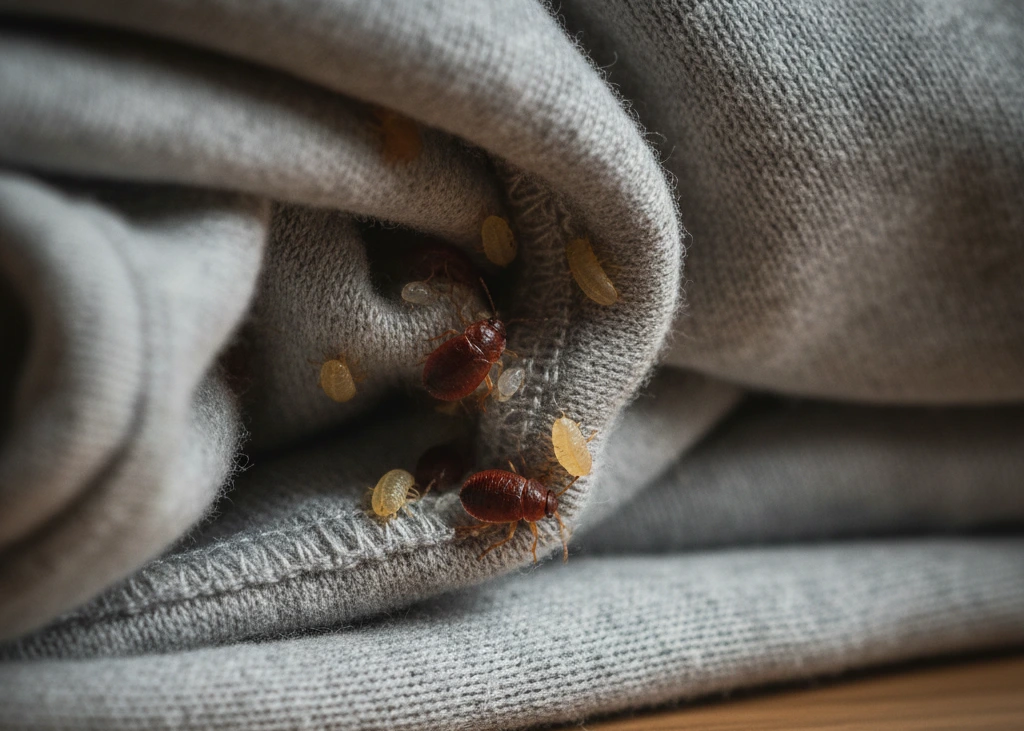
Ever thought about bed bugs lurking in your favorite red wool sweater or trendy high-waisted jeans? Sound silly? Well, it’s not a myth—it’s a reality. Bed bugs can live in clothes, especially during travel or in dark, hidden spots. They often hide behind seams or along hemlines.
Honestly, clothes aren’t their dream home. Not even close. Instead, bed bugs use your clothes as hitchhikers, like a personal Uber to move from one place to another near blood hosts.
How And Why Do Bed Bugs Get Into Clothes?
When bed bugs come into contact with your clothing, they can crawl right into it. So, how do they manage to get inside, and why do they seem to prefer targeting clothes? Figuring this out will help you eliminate them faster. You don’t need to be a detective to identify bed bugs—just know what to look for. Let’s break it down in detail.
How do bed bugs get into clothes?
Bed bugs are real travelers—they hitch rides with you, pay no fare, and suck your blood and infest your house—pretty ungrateful, right? Let’s explore how they sneak into your clothes:
Direct contact: Sitting or lying in an infested area can give bed bugs the chance to crawl into your clothes, bags, or pockets. Once there, they can hide and settle in.
By Hitchhiking: They love to hitch a ride in your travel bags or luggage, crawling into your clothes. The next destination? Your house. And guess what? You’re often the unintentional chauffeur.
From infested spots: Places like hotels, airports, theaters, or public transport can harbor bed bugs. So, wherever you go, stay alert.
From your clothes: Clothes left on the floor, in laundry baskets, or near beds can attract these bugs. They love the scent of your natural oils, and over time, they hide in your clothes.
Why do bed bugs get into clothes?
Clothes might be fascinating to you, but not to bed bugs. Bed bugs aren’t obsessed with your clothes—so why do they hide in them? There are a few selfish reasons.
Easy Transportation
Your clothes act like Uber for bed bugs. They can hitch a ride from one place to another via your clothing. When you’re traveling, worn clothes with your body smells signal to bed bugs that a food source is nearby.
Perfect Shelter
Bed bugs dislike light and movement. Unless they’re hungry, they typically don’t feed during the daytime. Clothes stored in bags or wardrobes provide them with a dark, cozy hiding spot.
Hiding Spots Galore
Clothes have pockets, hems, and folds—narrow gaps that serve as perfect hiding spots for bed bugs.
How Long Can Bed Bugs Survive In Clothes?
Wondering how long bed bugs can live without a host or food? Surprisingly, for quite a long time. They can hide in dark, hidden spots like closets or packed clothing and live for a few days up to many weeks. Their secret weapon? diapause—a dormant state that helps them endure harsh conditions.
If you wear infested clothes, bed bugs usually stay in secure spots like pockets and tend to avoid moving around. When night falls, they can feed on your blood through the fabric. Cooler temperatures can extend their survival even further—up to several months.
What Are The Signs Of Bed Bug Presence In Your Clothes?
Can a bite or sting at night mean you have bed bugs? Maybe, maybe not. There are other ways to be sure. Here are the typical signs of bed bug presence in your clothing:
Dark or dusty spots: You might find small, dark, or dusty spots from blood stains or feces.
Shaded skins: Bed bug nymphs shed their exoskeletons as they grow. These shed skins can indicate bed bug infestations.
Bed bug eggs: Bed bugs lay tiny, white eggs, often glued to the seams of clothes.
Live bed bugs: If the infestation worsens, you might see apple-seed-sized reddish-brown bugs. When they feed on blood, their color turns red.
Musty odor: A larger infestation may produce a musty smell in your clothes and wardrobe.
Stinging bites: Bed bugs are nocturnal and bite at night while you’re still and the lights are off. The bites can cause stress and discomfort.
How to Protect Clothes and Wardrobes from Bed Bugs?
Unlike other pests, bed bugs can survive without a host and thrive even in clean environments. Is there a way to protect your clothes from bed bugs? Absolutely. Here are some effective protection tips:
1. Cleaning Is Key
- Regularly clean your wardrobe or closet.
- Spray rubbing alcohol and peppermint spray after cleaning to deter bed bugs.
- Wash clothes in hot water and dry on high heat—this is highly effective in eliminating bed bugs and their eggs.
2. Store Your Clothes Properly
- Seal clothes in vacuum bags or airtight containers.
- Store your clothes in secure, protected areas—especially those you don’t wear often.
- For long-term storage, freeze clothes wrapped in plastic bags at -18°C for at least 72 hours, then store them properly afterward.
3. Vacuum Regularly
- Vacuum floors, carpets, mattresses, furniture, and wardrobes regularly.
- Pay special attention to gaps, seams, and corners where bed bugs hide.
- Consistent vacuuming is essential to protect your clothes and your home from infestations.
4. Manage Luggage When Traveling
- Never leave luggage on the floor, near walls, or on beds in hotel rooms.
- Keep luggage on a table or elevated surface.
- Always double-check your luggage before leaving a hotel and bringing it home.
5. Remove Clutter from the House
- Declutter areas where bed bugs could hide.
- Keep clutter away from bedrooms.
- Inspect these areas thoroughly before moving items elsewhere.
6. Hire Professionals
- DIY methods often aren’t enough to eliminate bed bugs.
- If you suspect bed bugs in your clothes or wardrobe, hire a professional pest control service for effective treatment.
What Dangers Do Bed Bug-infested Clothes Pose?
Bed bugs don’t just leave bites—they bring bigger problems than you might realize. The common risks include:
- Widespread infestation: After riding on your clothes, bed bugs can quickly spread throughout your entire home. Clothes are just a way for them to travel—once inside, they can infest everything from beds and furniture to tiny cracks and crevices, making your space unlivable.
- Disrupted sleep and stress: If you’ve dealt with it, you know those stinging bites can haunt you for life. When bed bugs bite, they disrupt your sleep and create constant stress. Like living through a nightmare every night.
- Health risks (skin infections and allergies): Bed bug bites aren’t just irritating—they can cause skin infections in sensitive people. They can also provoke allergic reactions, which may be painful, swollen, and occasionally lead to life-threatening anaphylaxis.
What Should I Do If I Suspect Bed Bugs Lurking in My Clothes?
If you suspect bed bugs are hiding in your clothes or have felt their bites, don’t wait—take action now. Here are the essential steps to follow:
- Seal the suspected clothes in plastic bags immediately.
- Wash the clothes in hot water at temperatures over 60°C (140°F).
- For clothes that can’t be washed, dry cleaned, or steamed at 60°C, use alternative methods.
- Tumble dry your clothes on high heat for at least 30 minutes.
- If washing or dry cleaning isn’t possible, isolate the clothes in a plastic bag and freeze them at -18°C (0°F) for at least 3-4 days.
- Once treated, store the clothes carefully to prevent re-infestation.
Expert Tips: How To Keep Clothes Safe From Bed Bugs?
Bed bugs don’t seek attention—they force you to notice them. They’re non-skippable pests. To keep them at bay, focus on these expert tips:
- Regularly wash your clothes and vacuum your home, including wardrobes.
- Double-check and disinfect any second-hand clothing or items before bringing them inside.
- If you suspect bed bugs in your clothes, treat them immediately with hot water or freezing methods.
- Use peppermint spray or keep naphthalene in wardrobes to deter bed bugs.
- Clear clutter around clothes and bedding areas.
- When staying in a hotel, keep your luggage off the floor and walls.
- Check your luggage thoroughly when checking out.
- Always use zipped bags and keep zippers closed.
- Avoid tossing clothes randomly on beds or sofas.
- Contact a professional pest control company to inspect and exterminate bed bugs thoroughly.
Bottom Line
Clothes are one of the most unpredictable hiding spots for bed bugs. Many people rarely suspect or wonder: Can bed bugs live in clothes? However, when it comes to bed bugs, no item in the house can be completely off the suspect list.
To ensure thorough elimination, don’t leave any piece of clothing unwashed after returning from a hotel or trip. Even if the clothes have been stored away for a while, wash them regardless of whether they’ve been worn or not. For more queries, you can contact the BPCA(British Pest Control Association).
Bed Bugs and Clothing Safety: Top FAQs
Can bed bugs survive the washing machine?
Yes, they can be killed if the temperature is higher than 60°C (140°F). The most effective way to eliminate bed bugs and their eggs is to wash clothes at 60°C (140°F) or hotter. Afterwards, dry the clothes in a tumble dryer for at least 30 minutes.
Can someone bring bedbugs into your home from their clothes?
Absolutely. Bed bugs frequently hitch a ride on clothes—kind of like they’re using them as a free Uber. They can hide in pockets, within the hems, or in tiny crevices.
Can you feel bed bugs crawling on you?
Most people aren’t aware of bed bugs crawling or biting since they do so silently. Only a small number of individuals can actually notice the bites. Still, some might mistake a phantom bite—triggered by trauma or hallucination—especially if they’ve had bed bug encounters before.
How fast do bed bugs multiply?
Bed bugs reproduce quickly because of their high egg production. A single female can lay around 5 eggs daily, accumulating up to 500 eggs throughout her life. It typically takes 6 to 8 weeks for a nymph to mature into an adult bed bug.
Can bed bugs travel on clothes you’re wearing?
Yes, they can, and they definitely would. Bed bugs keep hunting for fresh hosts and constant food. When your clothes are on, they usually hide in places like pockets, hems, or small fold gaps where they’re less likely to be disturbed.
What kills bed bugs permanently?
Professional heat treatment is the most effective and permanent method for killing bed bugs. Other effective options include heat washing, tumble drying, and cold treatment.
