
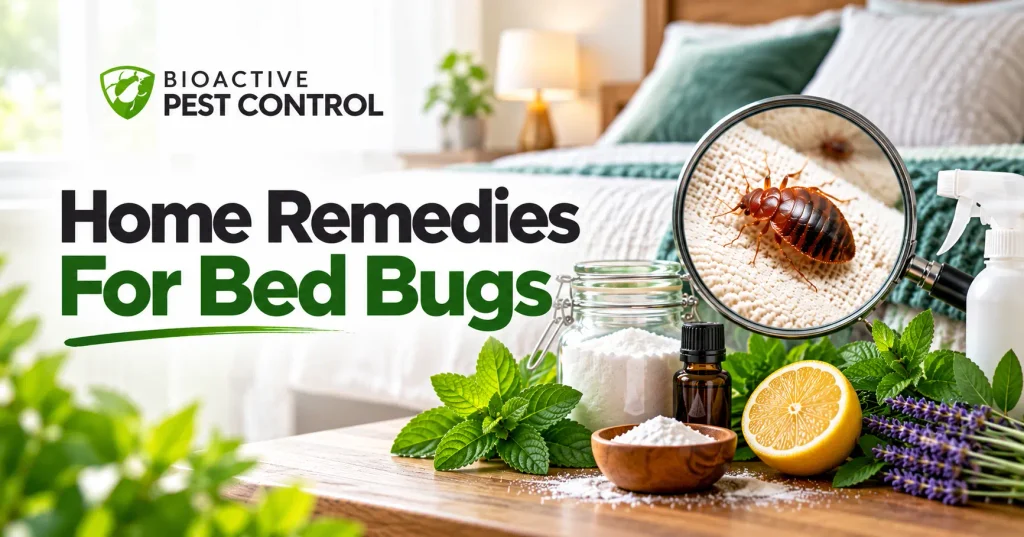
Bed bugs are the stowaways of the household world. These tiny vampires are masters of hiding. They slip into the seams of your mattress, the joints of your bed frame, the cracks in the furniture, and any other dark corner that offers shelter. Once they move in, evicting them is less like swatting a fly and more like draining a swamp. You have to reach every hidden pocket, not just the ones you can see.
Home remedies can be useful allies in this fight. They can thin the ranks and disrupt the colony, but they are rarely a silver bullet. If used carelessly, home remedies can put your property at major risk. You need to pair them with a professional bed bug control service that can help if the siege drags on.
This blog breaks down 15 home remedies for bed bugs, their infestation signs, supplier sources, benefits, drawbacks, and whether they’re enough to control bed bugs. Let’s dive in.
Top 15 Home Remedies For Bed Bugs: Application Methods
Fighting bed bugs is a siege, not a duel. They’re patient and well-hidden, and they can wait months between meals. Evicting them takes more than a single blow. You need a steady campaign of heat, cleaning, and barriers. These 15 home remedies can be the walls and weapons of that campaign:
1. High Heat Treatment
Heat is the bed bug’s kryptonite. Temperatures above 118°F (48°C), held long enough, kill bed bugs at every life stage, including eggs. Strip your bedding and give it a 30-minute ride in the dryer on the hottest setting the fabric allows. That sustained blast reaches deep into the weave, leaving nowhere to hide.
The catch is that DIY heat only works on items that fit in the dryer. For a full-room eviction, a professional heat treatment is often the safer option.
2. Hot Water Laundry
Washing is the river that carries the enemy away. Wash sheets, pillowcases, and blankets on the hottest setting the fabric tolerates, then move them straight to the dryer. The wash lifts bugs and eggs loose, and the dryer finishes the job.
Once the load is clean, store it in sealed bags. Otherwise, you’re laying fresh sheets on a battlefield.
3. Intensive Vacuuming
A strong vacuum is a physical eviction notice. Work a narrow crevice tool along mattress seams, baseboards, carpet edges, and furniture joints, and treat every suspicious crack like a suspect.
When you finish, empty the canister or bag into a sealed bag and take it outside right away. Leave it indoors, and you’ve handed the bugs a ladder out.
Note: Vacuuming alone won’t end an established infestation, because the deepest hideouts stay out of reach.
4. Steam Cleaning
Steam is a burst of lethal heat that slips into the cracks vacuums can’t reach. Use a steamer at a temperature of at least 130°F (54°C). Move the nozzle slowly over mattress seams, bed-frame joints, and furniture creases so the heat has time to reach the bugs. A quick pass is a summer shower that never reaches the roots.
Follow the manufacturer’s instructions, and be careful with moisture-sensitive materials. Steam only kills what it touches. So large infestations may need a professional.
5. Mattress and Box Spring Encasements
Add a twist to the strategy. Instead of hunting every bug, seal the vault. A bed bug-proof encasement traps bugs inside your mattress and keeps new ones out. Box springs, with all their folds and hollows, are apartment blocks for bed bugs, so encase them too.
Bed bugs can survive many months without feeding, so be patient. Keep the covers on for as long as the manufacturer or pest professional recommends, even after you stop seeing bugs.
6. Interceptor Cups
Interceptors are small moats under each leg of your bed. The outer rim is easy to climb, but the slick inner wall is a one-way slide into a trap they can’t escape.
They also act as sentries, telling you whether the colony is still marching. Keep the bed pulled away from walls and bedding off the floor, or the bugs will cross a drawbridge.
7. Diatomaceous Earth (DE)
Diatomaceous earth is a field of microscopic razor blades. Its sharp particles scratch the waxy coating that keeps a bed bug hydrated, and the insect slowly dries out. It works slowly, and only on bugs that walk through it.
Use a product labelled for pest control, apply a thin layer around bed legs and baseboards, wear a dust mask, and keep pets and children away. More is not better. Thick piles repel bugs and fill the air with dust. Never use food-grade or pool-grade diatomaceous earth for bed bug control, as inhaling the dust can be harmful.
8. Declutter the Room
Clutter is camouflage netting for bed bugs. Clear unneeded items from around the bed and from the floor, and clean out the space beneath it, which is a bed bug’s basement.
A tidy room makes every other remedy more effective. Move belongings in sealed bags, not by the armful, so you don’t carry the problem into other rooms.
9. Use Silica Gel
Silica gel is commonly found in small packets inside shoe boxes, vitamin containers, and food packaging. It absorbs moisture. It can be used as a potential bed bug control option because of its desiccant properties.
It can damage bed bugs’ protective outer layer, causing them to lose moisture and eventually die. But never crush or spread silica gel packets around your home. If using a silica-based pest control product, choose one specifically labelled for bed bugs and follow its safety instructions.
10. Pull the Bed Away From the Walls
Bed bugs can’t fly or jump, so they need bridges. Pull the bed a hand’s width or more from walls and furniture, and tuck sheets up so nothing dangles to the floor.
Your bed becomes an island. Cut every bridge, and the only way across is through your interceptors.
11. Rubbing Alcohol
Rubbing alcohol is mainly Isopropyl alcohol. It is commonly used as a contact treatment for bed bugs. When sprayed directly on an exposed bed bug, it may kill the insect quickly.
However, its effectiveness is limited to direct contact. If you choose to use rubbing alcohol, handle it with extreme care because it is highly flammable. Avoid spraying it on beds, furniture, or other large surfaces, and keep it away from flames, sparks, and heat sources.
12. Try Essential Oils As Repellents
Tea tree, peppermint, lavender, and clove oils contain compounds that may repel bed bugs under certain conditions. However, their effectiveness in real-world infestations is limited.
To make a spray, mix 10–15 drops of one essential oil with 250 ml of water and a few drops of dish soap. Shake well before use and lightly apply to suitable hard surfaces near potential hiding spots.
13. Seal Cracks and Gaps
Sealing cracks is like boarding up the windows of an abandoned house. After you’ve inspected and treated an area, close suitable gaps around baseboards, furniture, and walls with an appropriate sealant to remove hiding places.
14. Sticky Tape and Lint Rollers
For a few visible stragglers, wide sticky tape or a lint roller plucks them off like burrs from a coat. Seal the used tape in a bag and discard it. It’s a spot tool for the last holdouts. It’s quick, cheap, and satisfying.
15. Try Thyme to Drive Bed Bugs Out
Thyme contains thymol. Thymol is basically a natural biocide that drives bed bugs out of their hiding spots. When bed bugs detect thymol in the air, their survival instinct kicks in, and they flee the area rapidly. This is the time you can catch them red-handed. However, thyme is not a reliable repellent you can trust when fighting against bed bugs. If bed bugs persist after thyme application, you should call in bed bug experts.
Common Signs of a Bed Bug Infestation
Look for these common signs of a bed bug infestation:
- Live bed bugs: Small, reddish-brown, flat, wingless, apple seed-sized insects around mattress seams, bed frames, and furniture.
- Skin colour: After feeding, they swell and turn redder due to blood. Nymphs are usually smaller and translucent or whitish-yellow.
- Bed bug eggs: Tiny, pale white or off-white eggs and empty eggshells hidden in cracks, seams, and other sheltered areas.
- Shed exoskeletons: Light-yellow, translucent shells or cast skins left behind as nymph bed bugs grow.
- Dark spots: Small dark brown or black marks caused by bed bug droppings on mattresses, bedding, or furniture.
- Bite marks: Itchy raised bumps (red or pinkish on lighter skin tones, purple, brown, or red on darker skin tones) may appear. The bites may appear in lines, clusters, or a small zigzag pattern.
- Musty odour: A noticeable, unpleasant smell may emit from their scent glands in highly infested areas.
Where to Find Supplies for Bed Bug Home Remedies?
You rarely need to hunt far for bed bug treatment supplies. Most of them are available in everyday shops or specialist retailers.
- Supermarkets: Laundry detergent, cleaning products, and suitable storage bags.
- Hardware and Home-Improvement Stores: Vacuum cleaners, steam cleaners, and materials for sealing cracks.
- Bedding and Home Stores: Bed bug-proof mattress encasements and protective covers.
- Pest Control Retailers: Bed bug interceptors, suitable diatomaceous earth products, silica gels, essential oils, and labelled pest control treatments.
- Online Marketplaces: Baking soda, Isopropyl alcohol, Thyme, and a wide range of bed bug monitoring and treatment supplies.
Bed Bug Home Remedies: Advantages And Drawbacks
Home remedies can be a practical first line of defense against bed bugs, but they have limits. Know what they do well and where they fall short:
Advantages Of Home Remedies
- Affordable: Some useful tools, such as a vacuum cleaner, washing machine, and dryer, may already be available at home. So you don’t need to buy them separately.
- Easy to Start: Vacuuming, washing bedding, and reducing clutter can all begin the same day, with no appointments or waiting.
- Chemical-Free Options: Heat, steam, and physical removal can help control bed bugs without insecticide sprays.
- Prevention and Monitoring: Mattress encasements and interceptor cups do double duty. They take away hiding places and also show you whether bed bugs are still active.
Drawbacks Of Home Remedies
- Limited Reach: Bed bugs can retreat into wall cracks, furniture frames, and other spots that DIY tools simply can’t reach.
- Repeated Effort: One round of cleaning rarely finishes the job. Expect to repeat treatments over several weeks and keep checking for new activity.
- Egg Survival: Some methods may fail to reach or kill every egg. Eggs that survive can hatch later and restart the cycle.
- Unproven Remedies: Vinegar, baking soda, and essential oils are often recommended online. But they are not reliable standalone treatments for eliminating bed bugs.
- Incomplete Control: Established infestations may require professional treatment to be brought fully under control.
Are Home Remedies Enough To Control Bed Bugs?
Home remedies can win the early skirmishes, but they hardly battle against a large infestation of bed bugs. Once the bed bugs have settled in, you’ll likely need powerful reinforcements.
The most reliable approach is a combined campaign. If bed bugs keep appearing after repeated treatment, you may be looking at only the tip of the iceberg. The infestation could be larger or more widespread than it first seemed, with bed bugs sheltering behind walls or inside furniture. That is the moment you need to call professionals like Bio Active Pest Control.
Home remedies can help to a certain extent or alongside professional treatments. But they might not be enough when bed bugs have already taken over your property. Also, because bed bugs infest quickly, relying on home remedies alone isn’t a wise decision.
Bottom Line
The best 15 home remedies for bed bugs mainly focus on physically removing them and exposing them to conditions they cannot survive. Hot washing and drying, careful vacuuming, steam treatment, encasements, interceptors, clutter reduction, sealing suitable gaps, and controlled treatment of appropriate belongings can all support bed bug control.
However, no single home remedy is guaranteed to eliminate an infestation. Be especially cautious with online suggestions involving alcohol, vinegar, essential oils, or homemade chemical sprays. Don’t get lured by fake clickbait or misleading DIY bed bug control suggestions without verifying. If the infestation persists, hiring a professional pest control service can be a safer and more effective move.
Top Questions About Home Remedies For Bed Bugs
What Kills Bed Bugs Fast With Home Remedies?
High heat can kill bed bugs when it reaches them for the required time. Hot dryer cycles, steam cleaning, and thorough vacuuming can help control an infestation.
What Do Bed Bugs Absolutely Hate?
Bed bugs respond to heat and certain environmental conditions, but no particular smell reliably repels them. Some essential oils like peppermint, lavender, clove, etc have shown results in lab tests as repellents.
What Will 100% Kill Bed Bugs?
No single home remedy guarantees complete elimination. Professional heat treatment, steam cleaning, regular vacuuming, targeted insecticide application, and monitoring can reduce bed bug numbers.
How To Make Your Own Bed Bug Spray?
Pour clean water and rubbing alcohol into a spray bottle. Now add 10-15 drops of an essential oil and some dish soap. Mix well, and your bed bug spray is ready.
What Triggers Bed Bugs To Come Out?
Bed bugs usually come out because of the CO2 that we exhale, our body heat, and human scent on laundry. They come out mostly at night when the hosts(humans) are sleeping or resting.
How Many Bed Bugs Do I Have If I See One?
Seeing one bed bug does not reveal the size of the infestation. Inspect mattress seams, bed frames, furniture, and nearby cracks for additional insects and eggs.
Which Kills Bed Bugs Better, Vinegar Or Alcohol?
Neither is a reliable bed bug treatment. Alcohol may kill bugs on direct contact but is highly flammable, while vinegar is not proven to eliminate bed bugs or their eggs.
What Month Are Bed Bugs Most Active?
Bed bugs remain highly active during the summer months, from late spring through early autumn, especially in August and September.
