
Bed bugs- just hearing the name can send most homeowners into a panic. Superstitions and myths only add fuel to the fire, turning simple fears into full-blown nightmares. Unfortunately, false information spreads faster than these tiny pests, leading many to believe myths like ‘only dirty homes get bed bugs’ or ‘they’ll disappear on their own.’ These misconceptions can delay proper treatment, making infestations worse and harder to control.
In this guide, we’re busting the biggest bed bug myths, revealing the truth behind these pests, and showing you exactly how to get rid of bed bugs the right way before they take over your home.
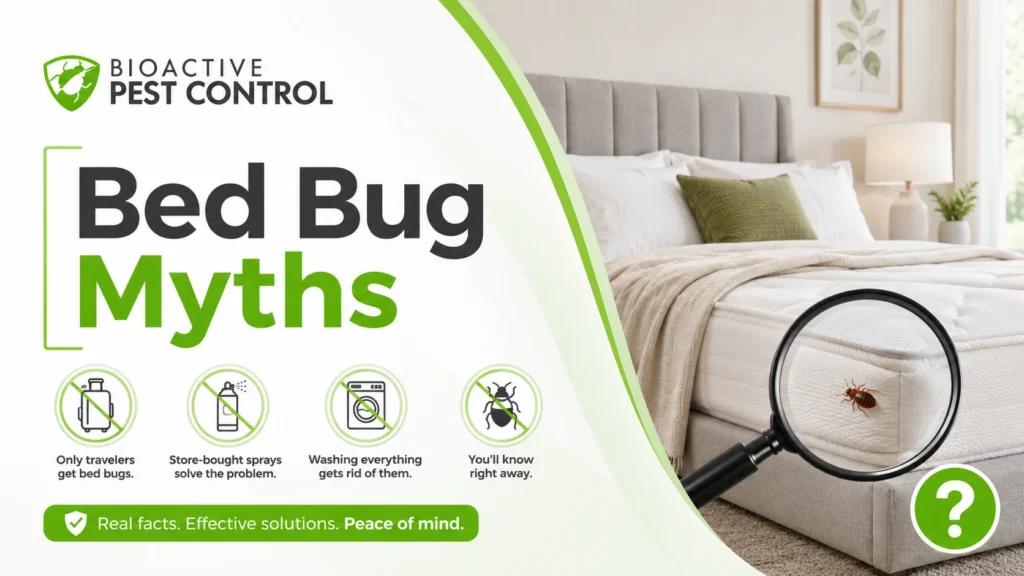
Top 10 Bed Bug Myths and Facts Every Homeowner Should Know
Before you hire bed bug professionals, numerous myths and misconceptions may cloud the reality of these pests. Here are the top 10 myths vs facts:
Myth 1: Bed Bugs Only Live in Dirty Homes
Fact: Bed bugs don’t discriminate based on cleanliness. They’re attracted to people, not dirt or filth. Even the most spotless hotels and luxurious apartments can fall victim to a bed bug infestation. Cleanliness has nothing to do with it. Remember, these tiny vampires are after your blood, not your mess.
Myth 2: Bed Bugs Are So Tiny You Can’t See Them
Fact: Not quite. Adult bed bugs are about the size of an apple seed, so they’re definitely visible to the naked eye without a microscope. Their tiny nymphs might be harder to spot, but with some careful inspection, you can catch them in the act. Spotting them isn’t impossible; it just takes a keen eye and a little know-how.
Myth 3: Bed Bugs Only Live in Beds
Fact: Contrary to their name, bed bugs aren’t just bedroom dwellers. They’re sneaky hitchhikers that hide in sofas, carpets, skirting boards, luggage, and even behind picture frames. These resilient pests can infest almost any cosy nook, making them a tricky foe to spot and eliminate.
Myth 4: Bed Bugs Spread Disease
Fact: It’s a common misconception that bed bugs don’t spread illnesses. But don’t breathe a sigh of relief just yet; their bites can cause intense itching, allergic responses, and may even trigger anxiety or stress, especially if you’re dealing with an infestation. They’re more of a nuisance than a health threat. They may not make you sick, but they sure can disrupt your peace of mind.
Myth 5: You’ll Always Feel When Bed Bugs Bite You
Fact: Most people don’t notice when they’re bitten. Bed bugs inject a tiny amount of anaesthetic, which means you often won’t feel the bite at all. Instead, reactions to the bites can show up hours or even days later, making it easy to miss the initial warning signs.
Myth 6: Bed Bugs Only Come Out at Night
Fact: Believe it or not, bed bugs aren’t just night owls. Although they prefer the cover of darkness, they’ll happily come out during the day if hunger strikes. These resilient pests are always on the lookout for a meal, so don’t assume they only bite under the cloak of night.
Myth 7: DIY Sprays Eliminate Bed Bugs Completely
Fact: Most over-the-counter sprays only kill the bugs you see on the surface; they don’t reach the hidden ones or eggs. That’s why bed bug problems often come back, no matter how many sprays you use. To effectively eliminate an infestation, professional treatment is typically required.
Myth 8: Bed Bugs Jump or Fly
Fact: Bed bugs can’t jump or fly. Instead, they crawl quickly and stealthily, squeezing through tiny cracks in walls, floors, and furniture to move from room to room. Their speed and ability to slip into the smallest spaces make them surprisingly elusive pests.
Myth 9: Throwing Away the Mattress Solves the Problem
Fact: Not quite. Bed bugs are sneaky. They often hide in places far beyond your mattress, like furniture, baseboards, and cracks. Just throwing out the mattress is like putting a Band-Aid on a bigger issue; you need targeted treatment to fully eliminate the pests.
Myth 10: Bed Bugs Will Eventually Die on Their Own
Fact: Bed bugs are incredibly resilient. They can survive for several months without a blood meal. Sitting back and hoping they’ll die on their own is a serious risk that can lead to a full-blown infestation. The longer you delay, the more entrenched they become.
Effective Strategies: How To Get Rid Of Bed Bugs For Good
Understanding what kills bed bug eggs is crucial. Here are the proven methods that actually work:
✔ Identifying All Infested Areas
Start by inspecting mattresses, bed frames, headboards, upholstered furniture, skirting boards, and nearby cracks. Look for live bugs, tiny white eggs, shed skins, black faecal spots, or small blood stains. Identifying every hiding place is essential because treating only visible areas rarely solves the problem.
✔ High-Heat Treatment:
Wash all bedding, clothing, curtains, and other washable fabrics at 60°C or higher. Then tumble dry on the hottest setting for at least 30 minutes. High heat kills both adult bed bugs and their eggs instantly. Store cleaned items in sealed plastic bags until the infestation is fully under control.
✔ Regular Vacuuming:
Vacuum mattresses, bed frames, carpets, upholstered furniture, and skirting boards to remove bed bugs, eggs, and debris. Use the crevice attachment to reach tight spaces, then immediately empty the vacuum contents into a sealed bag and dispose of it outside your home.
✔ Specialised Encasements:
Encasing your mattress and box spring with specially designed encasements traps any remaining insects inside while preventing new ones from entering. Keep the encasements in place for at least 12 months, as bed bugs can survive for extended periods without feeding.
✔ Steam Treatment:
A steam cleaner producing temperatures above 70°C can penetrate cracks and fabric where sprays may not reach. Slowly steam mattress seams, bed frames, furniture joints, and carpet edges, ensuring the heat has enough time to kill hidden insects and eggs.
✔ Applying Bed Bug Insecticides Carefully
Use insecticides specifically labelled for bed bug control, following the manufacturer’s instructions. Treat bed frames, furniture joints, skirting boards, and other known harbourages rather than spraying bedding or sleeping surfaces unless the product is approved for that use. In many cases, a follow-up application is needed to eliminate newly hatched bugs.
✔ Reducing Clutter and Monitoring Progress
Clutter provides countless hiding places, making treatment less effective. Keep rooms tidy and use bed bug interceptors or regular inspections to monitor activity. Because eggs may hatch after the initial treatment, repeat inspections and any necessary treatments are required every 7–14 days until there are no signs of bed bugs.
✔ Professional Heat or Chemical Treatment:
If bed bugs continue to appear repeatedly, professional pest control is the only solution. Experts use advanced heat treatments, commercial-grade insecticides, and integrated pest management (IPM) techniques to eliminate infestations more thoroughly and reduce the risk of reinfestation.
Why Professional Bed Bug Removal Matters
Bed bugs are incredibly tenacious. Just one missed egg can lead to a new infestation within weeks. While DIY treatments may reduce their numbers, they often fail to reach hidden bugs and eggs tucked away in cracks, furniture, and wall voids.
That’s why calling in bed bug experts is the safest, fastest, and most cost-effective way to reclaim your space. Professional exterminators use thorough inspections, commercial-grade treatments, and follow-up visits to ensure every stage of the bed bug life cycle is eliminated. Their expertise not only speeds up the process but also reduces the risk of reinfestation.
Final Words
Knowing the real facts about bed bugs can make all the difference. By separating myths from reality, you can spot an infestation early, contact the best professionals, keep your sanity intact, and avoid costly mistakes that allow the problem to spread.
Understanding how they behave is the first step towards effective prevention and long-term control. When it comes to bed bugs, knowledge isn’t just power; it’s your first and most important line of defence.
Top Bed Bug Myths and Facts: Your Questions Answered
What Can Be Mistaken For Bed Bugs?
Fleas, carpet beetles, lice, ticks, and even cockroach nymphs are often confused with bed bugs. Spotting the difference can save you from unnecessary panic. Know what to look for.
Do Bed Bugs Only Come Out At Night?
Not necessarily. While they prefer to feed under the cover of darkness, bed bugs will bite during the day if they’re hungry enough.
Can Bed Bugs Jump Or Fly From Place To Place?
No, they can’t. Bed bugs are expert crawlers but lack the ability to jump or fly. So they rely on hitchhiking to move around.
How Soon Will I Know If I Brought Bed Bugs Home?
Signs of bed bug infestation can show up within days or take several weeks, depending on how sensitive you are and how heavy the infestation is.
What Kills Bed Bug Eggs Immediately?
High heat is your best option. Steam, dryers, or professional heat treatments can instantly destroy eggs and bugs alike.
Can You Feel Bedbugs Crawling On You?
In most cases, you can’t. Most people don’t feel a thing due to bed bugs’ tiny size and their saliva’s numbing effect.
Where Do Bed Bugs Bite You Most?
Bed bugs crawl into bare skin with blood hunger. They love to target arms, shoulders, neck, legs, and any exposed skin while you’re sleeping.
Will Bed Bugs Disappear On Their Own?
Absolutely not. Without proper treatment, they only multiply and make your problem worse.
